
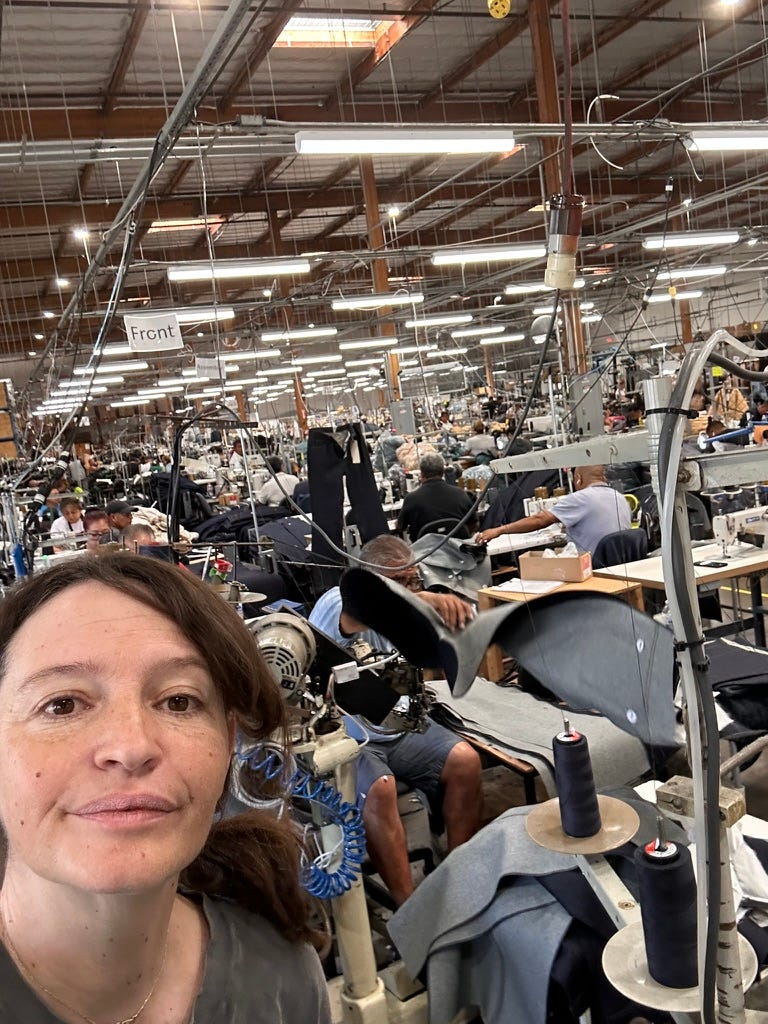
I’m doing a series of Q&A’s with people in my orbit to try to share from the inside out what having a brand, a denim brand among other things, and doing the work, is actually like. I think there is a lot of polish around fashion and the harder parts aren’t shared as much. I’m not going to filter it too much - unless needed for reasons I might not share- unless I decide to..
I’m going to start with a Q & A on myself. I know exactly the right questions to ask.
Q1: Why denim.
J1: Denim isn’t something you easily fall into, there are certain areas in fashion where a technical understanding of how to make something comes into play, and truthfully you get that through trying to learn it. In my case, it was on the job… for 25 years. And after so much time, I know a lot… but not all. Of course - it’s constantly changing. It’s constantly evolving and thank goodness.
Denim is a bit of an art form, denim snobs would agree. It takes a lot of thought to make something that looks natural, like you didn’t touch it at all. It takes, if not anything else, true love for that original thing. In my case, I truly have LOVED vintage jeans for 30 years. I’m not the afficionado that knows every label / year / stitch denim.. I’m more the kind that will spot the most perfect fit and wash from a pile of denim 2 rows over at a flea market, and even if I have 50 pairs, will die for another.. I’m a wash obsessive. The wash is my jam.
Denim is this perfect canvas for which to capture time within it. When you are designing denim, you are capturing the essence of wear and time in a moment. On your jeans. Applying patina and time to something new. And if you know more about me, you know that has a direct inverse relationship to why I also have spent a large chunk of the last 10 years working on 130 year old historic homes - another topic.
It’s something you catch, and it doesn’t leave you. If you love denim, and you dive into the nuance, then here you are.
Q2: Where do you buy the denim from and why. What’s important about this.
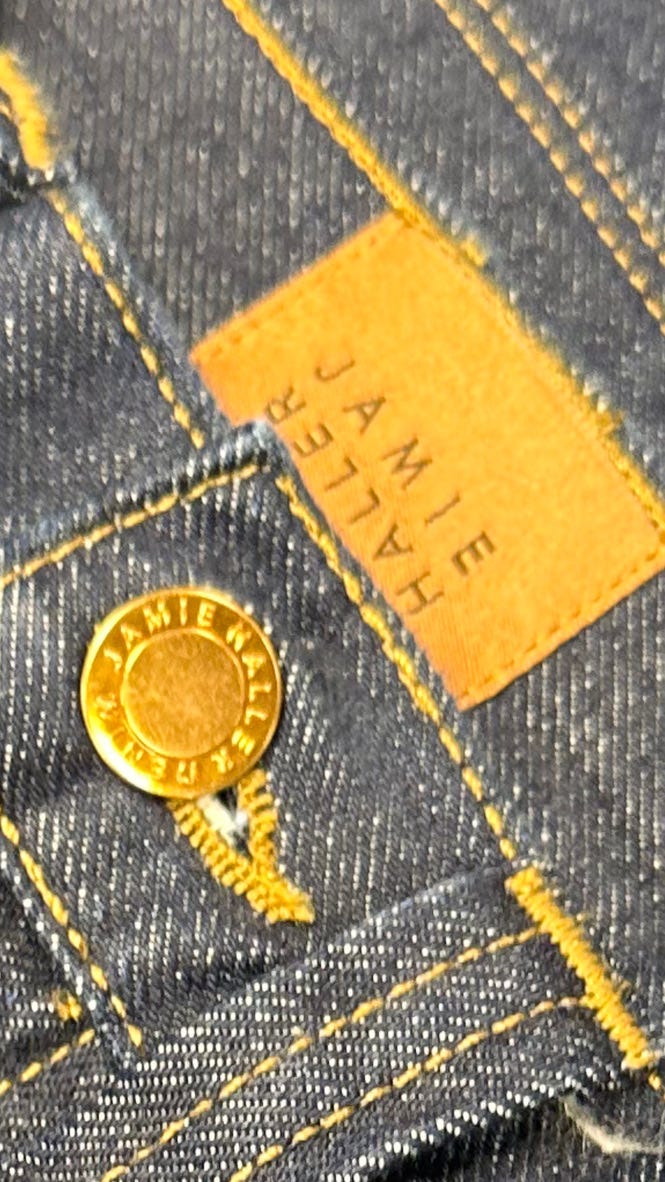
J2: I buy my denim from a few places. I buy it from Candiani, an Italy mill that makes some of the best denim in Italy. Why- because I have been buying from Candiani for 20 years, first as the denim designer at Guess Jeans, then at all of the companies along the way and now because they had what I was looking for.
I was looking for a 98/2 cotton elastine. A twill weave with comfort stretch, but with a weave that would wash down to look like vintage jeans. That requires a variety of indigo shades and dark dips I can lean into, I chose the Americana Blue one.. It’s that classic cast that gives you the right wash down. This is wear you start. Cast / Dips / Weave. Will the weave blossom with wash, will it open, will it soften, how does it marble, how does it look when chemicals are added, how does it open with handsand alone? How open is the weave, how does it wash down. I don’t like blue black casts - too 90s Diesel, I don’t like long slubs or twists, too contemporary, I don’t like tight weaves. I like what I like.
Minimums/ Leadtimes: This is a truthful, actual part of the conversation. I need a mill that supports small designers. When I started, I needed to be able to buy the denim, over and over.. I needed it to be in stock or running.. And I needed to be able to get it with average leadtimes. 8 weeks is ok. I love Japanese denim too, but the leadtimes and minimums were too long. Many Japanese denim mills had higher minimums and longer 14 week leadtimes and that is hard when you are starting out.
I want to make my jeans in LA. I am not making in Mexico, in Turkey or China or Vietnam. Most brands do. Any brand under 400$ is.. It is expensive to make in LA. But you get a different make. Yes, you can make in Japan.. but I want to micromanage it, I want to know everything, every mark, stitch, adjustment to happen under my nose where I can touch it and inspect it and make it as good as I possibly can.

Q3: Where do you make your jeans and why?
A3: This is important. Similar answer. I make my jeans in a place that supported me, believed in me and had all of the skillful technical know how to support the kind of washes I wanted to do. I make with Saitex in Los Angeles. Los Angeles is the epicenter of good denim. The skill of the people who have been making premium denim is beyond. That is something you can’t change, do you have skilled technicians…
Saitex is a B Corp certified company, the cleanest denim factory and laundry in the world. It is a whole other post - So I am going to dedicate a 2nd post to telling you about how dirty the denim industry is and why doing thoughtful sustainable denim is important. It is a part of the why, although it isn’t what I lead with.. I just believe that doing good is doing good.
Long short answer is to work where your values are aligned, where they understand you and where you will be supported. And then you can all make beautiful music and denim together.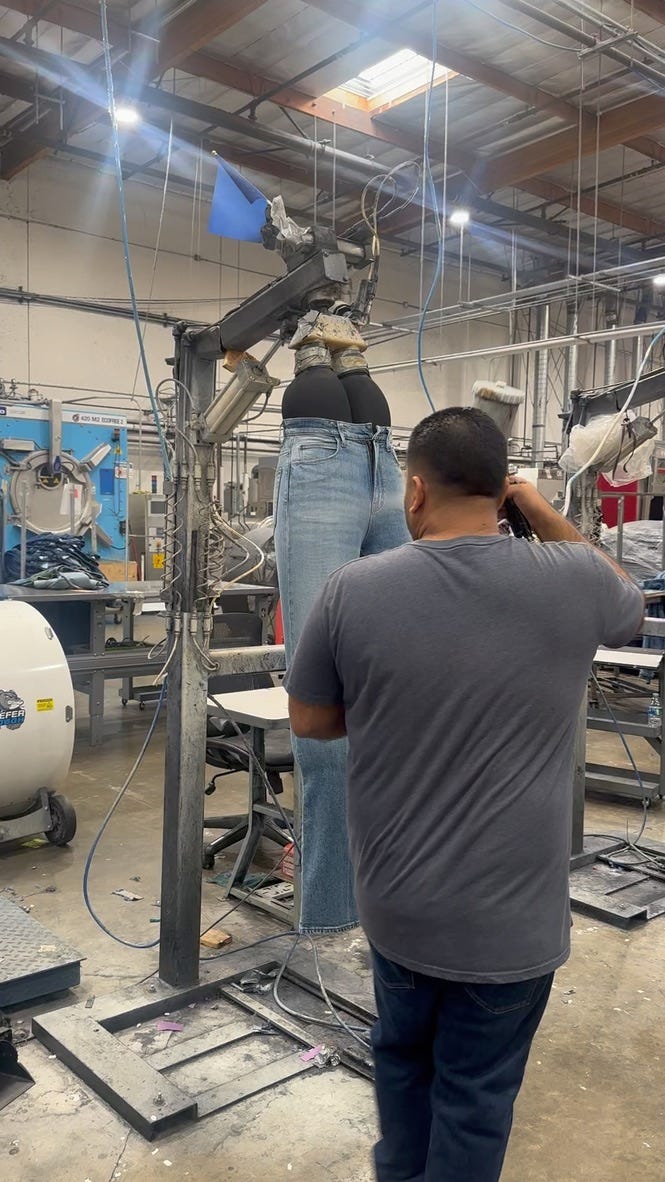
Q4: What is happening here? How is your denim made to look so authentic.
J4: It comes from 25 years of wash understanding.. and knowing how I want it to look. It’s working with people that have the same ideas about making denim. And it’s allowing them to make their art. Above, they are handsanding each whisker, each crease each mark to make the wash feel soulful, old, lived in, a part of you. That’s all handwork.

Q5: How have you grown the denim in 2 years to the place it is?
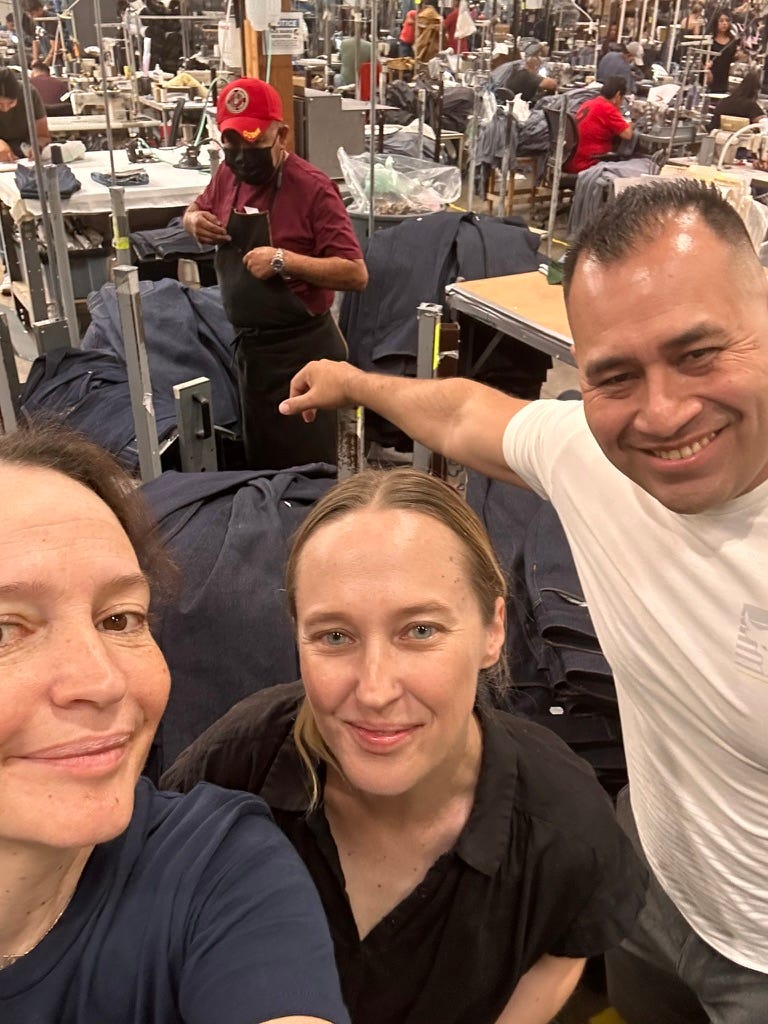
J5: High expectations. I make sure it meets every expectation I have for fit, wash and quality at every step. I employ people to carry it out whose dedication to the quarter inch is aligned with mine. Everyone on my team works with way. It’s the only way to ensure it’s really good product. Using the best materials, using consistent materials, using people who understand it all and staying focused.
And people…
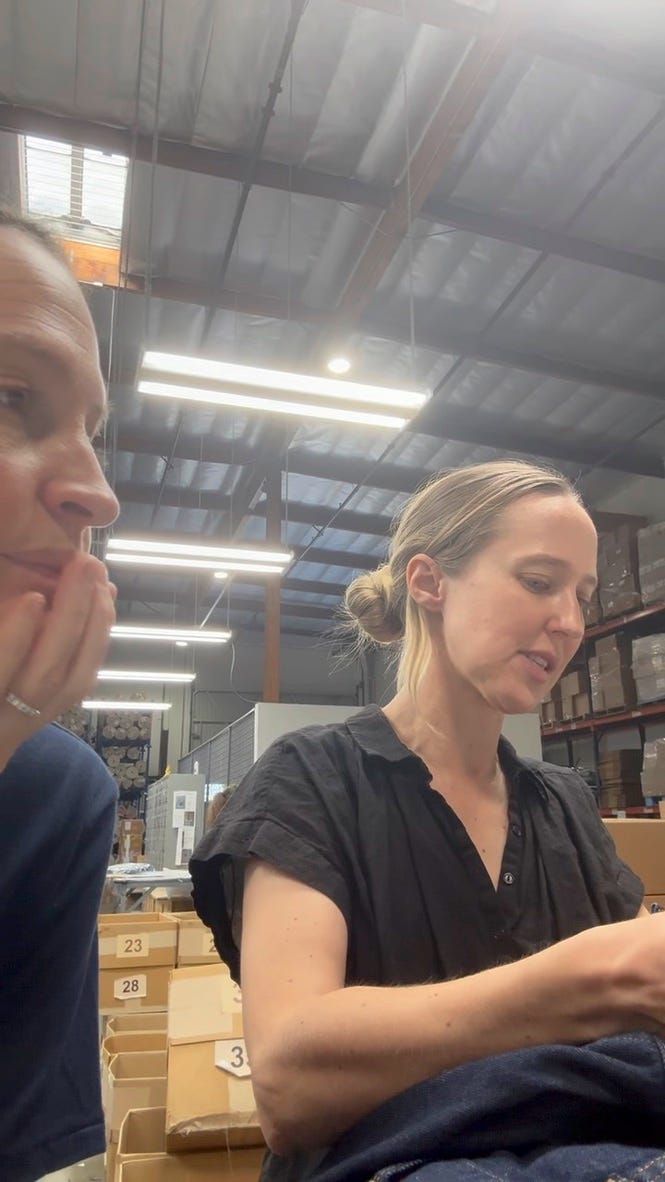
Above: Jen, my denim ride or die. She also does denim for Khaite and for Aflalo. She carries out my vision and she was the first person who I took this step into denim with. We met on IG (yay social media) and I knew we needed to hang out. We had a coffee date at Canyon Coffee in Echo Park and I knew she was the person who would care as much as I did. Edwin is also to the right of her, he works for Saitex and manages the development and production of the product and is my first call when something is wrong.. ha ha. However things have been pretty right lately so my stressy calls are less and less. But the other thing in denim is that there is always something wrong. Always. But then that means our jobs are filled with variety and challenge.
Q6: Is making jeans hard?
J6: Yes, it is extremely hard.. harder than anything else imo.
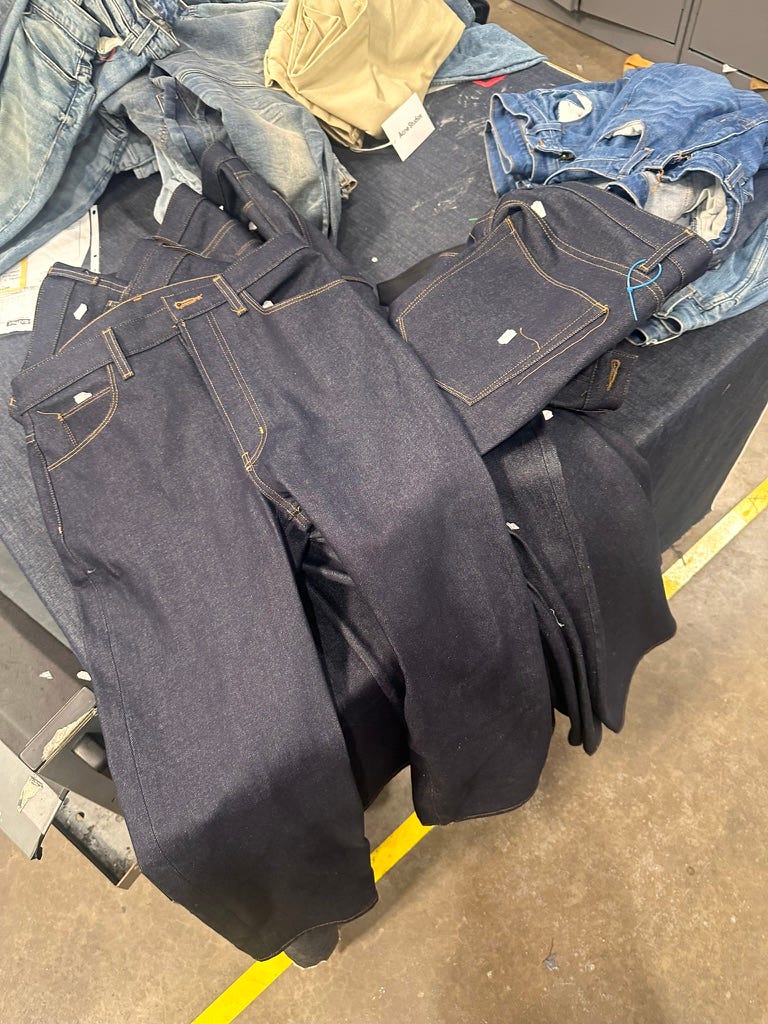
Denim is made raw, like above.. then washed. When you decide on the fit, you have to add in the amount it might shrink.. You need to account for roll to roll variety in shrinkage, for different people doing your production, for water temp, for all of it. The wash house is the people who do this. A miscalculation of shrinkage can ruin your fit. Everytime you order new denim, the shrinkage of those roles changes. The exact dip and indigo value changes. Everything is recalculated every time you make the jean..
A laundry who isn’t consistent is the death of your business. A bad wash or ill fit will ruin the 9 months of work you put into a new jean. I have been there, it’s heartbreaking. And it’s common, and that is why denim is hard.
IN all of the guessing, all of the calculation, all of the randomness of things you cannot control.. you can do it all right, the fabric, the wash test, the calculations, the 4 fittings, the size set, the load test, and then at the last moment, something can happen outside of your control. One subbed in laundry tech who isn’t used to performing your formula can mess it all up. One miscalculation.. game over.
Denim and Shoes are the hardest things imo. Why I picked those two areas to focus in is my masochist nature.. but honestly, I actually think it just goes back to my love of old soulful pieces and those then get better with age. Those you love because they become you. It just so happens , and goes back to that application of time and patina on a new thing, that that is very hard to accomplish.
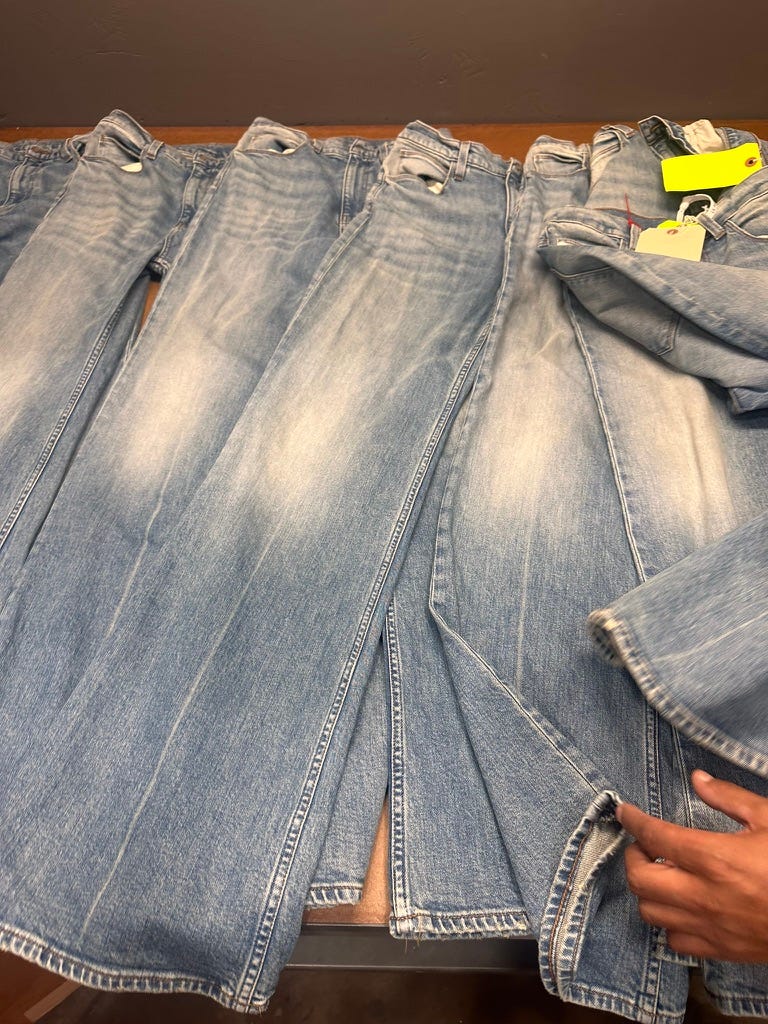
It’s all so hard. Making clothes, running a business, running these microbusinesses within the big business. It’s one thousand steps in all directions at the same time. And I do it because I can’t not do it. It’s unfolding and becoming me.. just like the loafers become you or me, just like the denim does. I have no choice now. I’m in it.
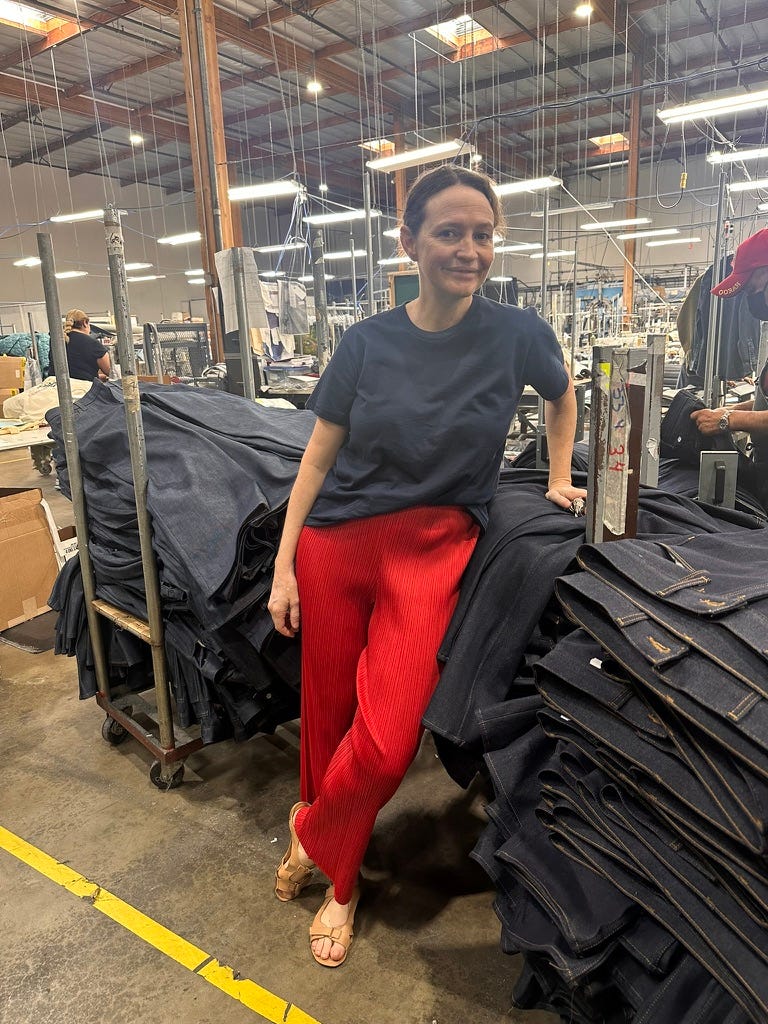
xx Jamie
more to come.